Career Guide
How to Become a Barber
How Do You Become a Barber?
To become a barber, you finish your state's required training (746 to 1,800 school hours, most often 1,500), pass the state board's written and practical exams, and apply for the license. In 34 states and territories you can train as a shop apprentice instead of going to school. The hours checker shows your state's numbers, and the national ranking compares 616 programs.
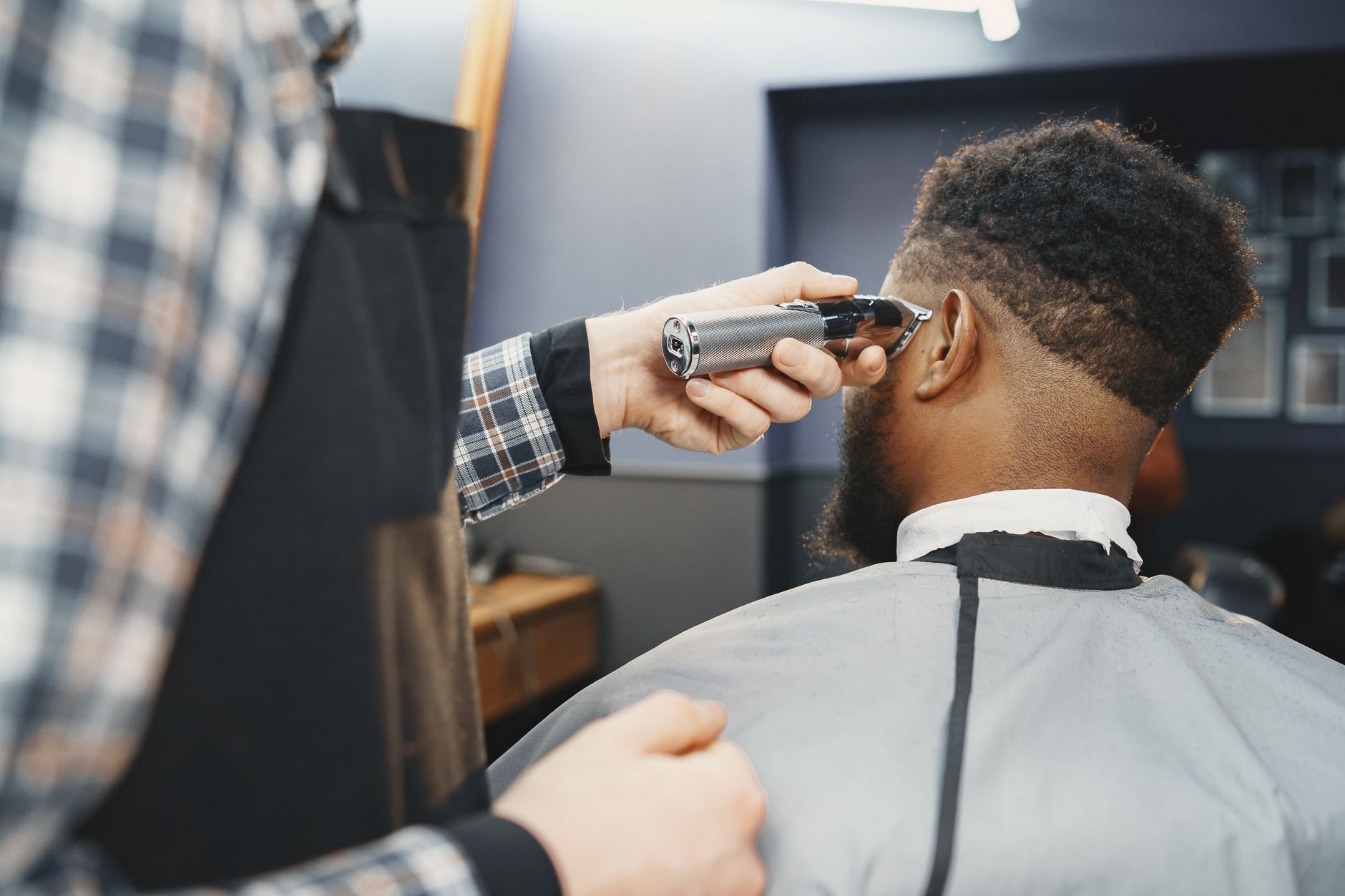
How to Become a Barber, From First Class to First Chair
Every state, plus Washington, D.C. and Puerto Rico, licenses barbers through a board. The path has the same shape almost everywhere, and the order matters, so here it is in sequence:
- Check your state’s hours and route. School hours run from 746 in Oregon to 1,800 in Michigan, Nebraska and Ohio. The license hours checker shows yours, and the barber license guide compares every state.
- Pick school or apprenticeship. 34 states and territories accept shop training under a licensed barber. The rest require a licensed barber school.
- Finish the hours. A full-time 1,000-hour course takes about eight months; a 1,500-hour course about a year.
- Pass the board exams. Most states give a written theory test and a practical exam, often with a haircut and a shave in front of an examiner.
- Apply for the license and pay the fee. Alabama charges $50 for an original license, Pennsylvania $173 for application and both exams.
- Serve any required apprentice period. North Carolina, South Carolina, Nevada and Kentucky add a supervised stretch in a shop after school before the full license.
That last step surprises people. If you plan to train in one of those four states, count it in your timeline.
Barber License Requirements by State
The table shows how far apart the states are. Hours are the board’s own numbers; apprenticeship hours appear where the board publishes them.
| State | School hours | Apprenticeship | Exams |
|---|---|---|---|
| California | 1,000 | 3,200 hours over two years | Written exam (PSI) |
| Texas | 1,000 (Class A) | Not offered | Written and practical (PSI) |
| Florida | 900 | Not offered | Computer-based exam (Pearson VUE) |
| New York | Set by the approved school | 2 years as a registered apprentice | State practical exam |
| Illinois | 1,500 | 3,000 hours from January 1, 2027 | Barber exam, five languages from October 2026 |
| Ohio | 1,800 | Not offered | Board exam |
| Michigan | 1,800 | 1,800 hours | Board exam |
| Tennessee | 1,500 (master barber) | Not offered | Written and practical (PSI) |
| Virginia | 750 | Allowed | Written and practical |
| Washington | 1,000 | 1,200 hours | Licensing exam |
| Alabama | 1,000 (Class 2) | 2,000 hours | Written and practical (PSI) |
| North Carolina | 1,528 | 12 months after school | Apprentice exam, then clinical exam |
A few rules change the picture. California cut its requirement from 1,500 to 1,000 hours on January 1, 2022. Virginia dropped its barber minimum from 1,100 to 750 hours on December 1, 2025. Texas lets you take the written exam after 900 of your 1,000 hours, and Florida lets a school certify you for the exam after 600 actual school hours.
If you might move, train to the higher standard. A 1,000-hour certificate from Texas or California falls short of the 1,500 hours Tennessee, Illinois or Kentucky ask for.
School or Apprenticeship: Which Route Fits You
Barber school is the faster, more structured route. You learn theory and practice on mannequins and clients in a student clinic, and the school certifies your hours to the board. It costs money up front: published tuition runs from $2,304 to $24,000 across 339 programs, with a median of $15,000.
An apprenticeship usually costs little or nothing in tuition, but it takes more hours and you need a licensed barber willing to train you. Apprenticeship requirements run from 1,000 to 3,200 hours, most often 2,000. Alabama, Missouri and Wisconsin each set 2,000 hours, against 1,000 school hours. Hawaii and Illinois ask for 3,000.
Pick an apprenticeship if you already have a shop and a mentor lined up and you can’t stop earning to attend school. Pick school if you want the license sooner, want federal student aid, or live in a state that requires it. The barber apprenticeship guide lists every state’s rules.
What Barber School Costs
Public technical colleges post the lowest tuition. South Dade Technical College in Homestead, Florida lists $2,304 in-state tuition for its 900-hour course, plus $600 for books and supplies. Manatee Technical College in Bradenton lists $2,628. In Tennessee, Tennessee College of Applied Technology-Dickson posts $5,518 in tuition and fees for its 1,500-hour evening course.
Private barber colleges cost more and often start more often. Associated Barber College of San Diego charges $16,750 for 1,000 hours and $22,245 for 1,500 hours, with classes starting every 5 weeks. Cosmetology & Spa Academy in Crystal Lake, Illinois lists $24,000 for its 1,500-hour program, plus $1,500 for books and supplies.
Read the kit line separately. Kits, books and tools run from a few hundred dollars to more than $3,000 at some schools, and they’re often listed apart from tuition. The barber school cost guide and the cost comparer break this down.
How Long Training Takes on Day and Evening Schedules
The median program in the national set lists 1,000 hours and 39 weeks. Your schedule matters as much as the hours:
- Summit Salon Academy in Tampa: 900 hours, 7 months full time or 12 months part time.
- Tennessee College of Applied Technology-Elizabethton: 1,500 hours on an evening and part-time schedule, 18 months.
- Bellus Academy-Poway in California: 1,000 hours, 29 weeks by day or 40 weeks at night.
If you work full time, look for evening or part-time tracks: 134 programs list evening classes and 152 list part-time options. The part-time barber programs ranking sorts them, and the barber school length guide covers hours and weeks state by state.
The Route to Your Barber License
- Choose a state-approved barber program: 616 verified, with a median of 1,000 clock hours. Or, in 34 states, train as a barber apprentice in a licensed shop.
- Finish the hours your state requires: 746 to 1,800, most often 1,500.
- Pass the state board's written and practical exams.
- Apply for the license and start cutting: barbers earn a median of $38,210 in wage and salary jobs (BLS, May 2025).
Barber School Hours by State
| Required hours | States |
|---|---|
| Under 1,000 hours | Florida, Idaho, Maine, New Hampshire, New Jersey, Oregon, Vermont, Virginia |
| 1,000 hours | Alabama, California, Connecticut, Massachusetts, Missouri, Texas, Utah, Washington, Wisconsin, Wyoming |
| 1,001 to 1,499 hours | Arizona, Delaware, Kansas, Maryland, Montana, New Mexico, North Dakota, Oklahoma, Pennsylvania, West Virginia |
| 1,500 hours | Arkansas, Colorado, District of Columbia, Hawaii, Illinois, Indiana, Kentucky, Louisiana, Minnesota, Mississippi, Nevada, Rhode Island, South Carolina, South Dakota, Tennessee |
| More than 1,500 hours | Alaska, Iowa, Michigan, Nebraska, North Carolina, Ohio |
From each state board's barber license rules, checked November 2026.
The State Board Exam and Your First License
Most boards use a testing company such as PSI, Prov, Prometric or Pearson VUE, and many use the national NIC barber exams. Expect two parts:
- Written theory: sanitation and infection control, state law, hair and scalp science, and chemical services where your license covers them.
- Practical: you work on a model or mannequin while an examiner grades you. Kentucky’s apprentice exam lists a taper haircut, a shampoo, a straight razor facial shave, a facial and a chemical application.
Passing scores are usually 70% or 75% per section: Indiana sets 70%, and Oklahoma and Montana require 75% on each part. Fees differ just as much: Florida caps its original license fee at $100, while Nebraska’s $300 student and exam fee includes the two-year license.
Schools that publish their pass rates give you a preview. The median published licensure rate across 108 programs is 92%. New Tyler Barber College in North Little Rock reports 100% licensure (15 of 15) in its 2026 ACCSC annual report.
Adding Barbering if You Already Hold a Cosmetology License
Sixteen states publish a crossover rule. Licensed cosmetologists finish a shorter course instead of starting over:
| State | Extra training for a licensed cosmetologist |
|---|---|
| Wyoming | 150 hours |
| Vermont | 150-hour course or crossover apprenticeship |
| Arizona | 200-hour barbering techniques course |
| Nevada | 400 hours of specialized barber training |
| Arkansas | 550-hour crossover program |
| Pennsylvania | 695 more hours after 555 hours of credit |
| Ohio | 1,000 hours instead of 1,800 |
The barber crossover programs ranking lists the schools that teach these courses.
What Barbers Earn
The Bureau of Labor Statistics puts the median pay of barbers in wage and salary jobs at $38,210 a year, or $18.37 an hour, in May 2025. The lowest-paid tenth earned under $28,600 and the top tenth over $76,460. Those figures leave out self-employed barbers and booth renters, who make up a large share of the trade. Pay also swings by state: the median is $61,150 in Washington and $30,760 in Texas. The barber salary guide has every state.
Which Path Suits Your Situation
You work full time. Look at evening tracks at public colleges first. Tulsa Technology Center runs its barbering course Monday to Thursday evenings over 15 months, with 2026-27 adult tuition of $5,000. If your state allows it, an apprenticeship lets you train while you earn, but you still owe the full apprentice hours.
You want federal student aid. Choose an accredited school that says it takes part in federal aid. The financial aid ranking lists the programs that say they do, and grant aid can change which school costs you least.
You’re choosing between a barber college and a community college. Barber colleges often start classes monthly and run day and evening sections. Community and technical colleges cost less but start once or twice a year: Gateway Technical College in Kenosha starts in fall and spring and lists $4,601 in tuition and fees for two semesters. The community college ranking compares them.
You’re already a licensed cosmetologist. Check the crossover table above before you enroll in a full program. In Texas, up to 700 hours from a Cosmetology Operator course can count toward the 1,000-hour Class A barber course.
How to Choose a Barber School
Use this checklist when you compare schools in your state ranking:
- Hours that match your state, and the higher standard if you might move.
- A published pass rate, with its year and the report behind it (a NACCAS or ACCSC annual report, or a state disclosure).
- The tuition and what it leaves out. Summit Salon Academy lists $13,725 in tuition plus $3,600 for books and kit, while Stacey James Institute lists $23,742 for tuition, fees, books and supplies together.
- A schedule you can keep. Bellus Academy’s 1,000-hour course takes 29 weeks by day and 40 at night.
- Federal aid, if you need it: 396 programs in the set say they take it.
- Accreditation, as the school states it: most name NACCAS, while public colleges name COE or a regional accreditor.
Then search your area with the school finder.
Frequently Asked Questions
How Long Does It Take to Become a Barber?
Most full-time programs run seven to fourteen months. Summit Salon Academy in Tampa lists 7 months full time for its 900-hour course, and Tennessee College of Applied Technology Northwest lists 14 months for 1,500 hours. Evening and apprenticeship routes take longer.
Can You Become a Barber Without Going to School?
In many states, yes. 34 states and territories allow an apprenticeship route, usually 1,000 to 3,200 hours in a licensed shop under a licensed barber. Florida, Texas, Ohio, Indiana and Colorado are among the states that require school.
How Old Do You Have to Be to Get a Barber License?
It depends on the state. Alabama, Arizona, Colorado, Florida and Illinois list 16; California, Michigan and Texas list 17; Indiana, Louisiana, Montana and Nevada list 18.
Do I Need a High School Diploma to Be a Barber?
Not everywhere. Alabama asks for 10 grades, California for the 10th grade, and Ohio, Pennsylvania and Arkansas for the eighth grade. Kansas, Montana and Nebraska ask for a high school diploma or the equivalent.
What Is on the Barber State Board Exam?
Most states give a written theory test and a practical exam. Kentucky's apprentice practical includes a taper haircut, a shampoo, a straight razor facial shave, a facial and a chemical application, and Oklahoma and Montana require 75% on each part.
Is a Barber License Good in Other States?
Not automatically. Each board sets its own transfer rules: Alabama licenses by reciprocity for a $100 fee, Virginia by endorsement for $120, and Ohio's reciprocity license has a statutory maximum of $300.
Keep Reading
- Master BarberWhat master barber means in each state, where it is the basic license title, where it is a second tier, and the hours each requires
- Barber ApprenticeshipWhich state boards let you train as a barber apprentice instead of going to school, the hours each requires and how the route works
- Barber License RenewalHow often each state makes barbers renew, the fees and the continuing education the boards require
- Cost and TuitionWhat barber school costs, from the program tuition figures schools publish, what the tuition leaves out and how to pay for it
- How Long Training TakesHow many clock hours and weeks barber school takes, by state requirement and by the schedules schools publish
- Online Theory ClassesWhat part of barber training can be online, which schools run hybrid theory and why the cutting and shaving hours stay in person
- Best Barber SchoolsEvery verified program, ranked
- Barber License by StateHours, exams and fees in every state
Sources
- Texas Department of Licensing and Regulation: apply for a Class A barber license
- Alabama Board of Cosmetology and Barbering: barber license
- Virginia DPOR: barber and cosmetology curriculum
- U.S. Bureau of Labor Statistics: Barbers, May 2025 (39-5011)
- State licensing boards' barber license pages, rules and statutes, checked November 2026
- U.S. Bureau of Labor Statistics, Occupational Employment and Wage Statistics, May 2025: Barbers (39-5011)